
You have probably felt it. You add a few extra cans to the cart. You tuck a little more away in savings. You start wondering what would actually happen if the power went out for two weeks, or your job disappeared next month. And then a quiet, uncomfortable thought slides in. Is prepping biblical, or am I quietly admitting I do not trust God?
That question keeps a lot of Christians stuck. Some prep in secret because they feel guilty about it. Others refuse to prep at all because someone told them it was a sign of weak faith. Both responses miss what the Bible actually says, and both can cost a family real peace.
By the end of this article, you will know exactly where Scripture lands on this question, why some of the most faithful people in the Bible were aggressive preppers, and how to start preparing your own family without falling into fear or hoarding. Stick with me. The answer changes how you read your Bible.
Is Prepping Biblical? Yes, and Scripture Is Surprisingly Direct
Let me give you the short version up front, because your time matters. Yes, prepping is biblical. The Bible does not just allow preparation. It commands it, models it, and praises it. The trouble only begins when prepping becomes a replacement for trust in God instead of an expression of it.
What you are about to read is the case Scripture actually makes for being prepared. Some of it might shake the way you have been thinking about faith and planning. Some of it will probably feel like permission you have been waiting years to hear.
Before we touch a single verse, let us define the term. Prepping is not panic. It is not bunker culture. It is the simple choice to be ready for difficulty before difficulty arrives. That can mean extra groceries, a clean water source, an emergency fund, basic medical skills, or just a plan for your family if things go sideways. None of that is sinful. Most of it is plainly wise.
The Quiet Guilt Many Christian Preppers Carry
Before the verses, name what is actually happening inside many believers who feel pulled toward preparedness. There is often an unspoken guilt about it. Maybe a friend hinted that you were being faithless. Maybe a pastor said worry equals sin. Maybe you grew up in a church that prized “stepping out in faith” over any kind of planning at all.
That guilt has a source. But it does not have biblical roots. The same Bible that tells you not to worry also tells you to plan, to store, and to provide. The misunderstanding has cost a lot of families their peace, and in some hard seasons, it has cost them more than that.
If you have been carrying that guilt, you can set it down. Keep reading. The Bible is going to set you free from it.
Noah Spent Decades Prepping and the Bible Calls It Faith
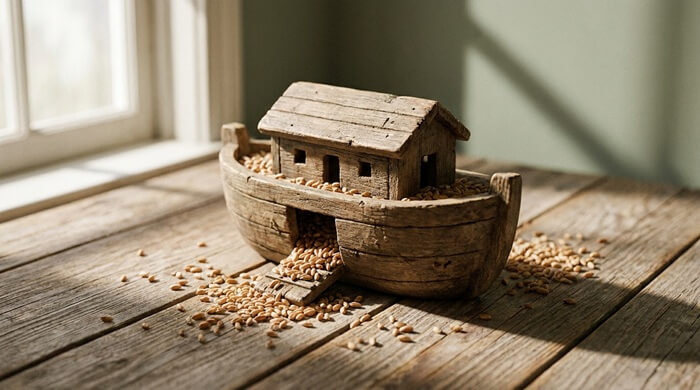
Start with the most obvious example in Scripture. Noah was the original prepper. God told him judgment was coming, and Noah did not respond with a quick prayer and a passive shrug. He picked up tools.
For decades, Noah built. He sourced lumber. He shaped a massive vessel. He stockpiled food for his family and for thousands of animals. He worked through years of ridicule from neighbors who thought he had lost his mind. And the entire time, he was preparing for something he had never seen with his own eyes.
Hebrews 11:7 (ESV)
Pay attention to what Hebrews calls this. Faith. Not fear. Not paranoia. Not “weak trust in God.” Faith. That single word changes the whole conversation about whether prepping is biblical. Noah’s preparation was not a sign that he doubted God. It was the very thing that proved he believed Him.
Joseph Ran the Most Famous Prep Operation in History
If Noah is the most personal example of prepping in the Bible, Joseph is the most strategic one. Pharaoh had a dream. Joseph interpreted it. Seven years of abundance, followed by seven years of brutal famine. Most people would have called for a prayer meeting and left it there. Joseph designed a national storage program instead.
Genesis 41:34-35 (ESV)
For seven straight years, Joseph stored 20 percent of an entire nation’s harvest. He built grain facilities. He tracked inventory at a scale that would impress a modern logistics company. And when the famine finally hit, his prepping fed his nation, saved his estranged family, and shaped the future of Israel.
Here is the part most people miss. The same God who revealed the famine to Pharaoh also gave Joseph the wisdom to prepare for it. God did not whisper, “trust Me and do nothing.” He whispered, “Here is what is coming. Build.” You can read Joseph’s grain storage plan in Genesis 41 in full to see how detailed the preparation was.
If God Himself orchestrated a seven-year prep project to save His people, it is very hard to argue that storing food for harder days is somehow unspiritual.
Proverbs Reads Like a Preparedness Manual
The book of Proverbs is, in many ways, the Bible’s quiet handbook on readiness. It returns to this theme over and over again. These are the verses most Christian preppers eventually have underlined in their own Bibles.
Proverbs 22:3 (ESV)
The prudent person sees trouble coming and takes shelter. The simple person walks right into it. Solomon does not call the prudent person faithless. He calls them wise. That is not a small distinction. It is the foundation of everything else.
Proverbs 6:6-8 (ESV)
Even an ant, with no leader, no manager, no oversight committee, knows how to gather food for the winter ahead. Solomon holds her up as the model. If creation itself shows us this rhythm, what excuse do we have not to live it?
Proverbs 21:20 (ESV)
Reserves in the home equal wisdom. Spending everything the moment it lands is what marks a fool. The Bible is not subtle on this. A home with savings, food stored, and tools ready is a home Scripture would proudly call wise.
Other Bible Heroes You Probably Did Not Realize Were Preppers
Noah and Joseph get most of the attention in this conversation. They are far from alone. The pattern of preparation runs through the lives of many faithful figures in Scripture, and a few of them might surprise you.
- Nehemiah rebuilt the walls of Jerusalem with workers who held a tool in one hand and a sword in the other. He prepared for opposition before it ever arrived. Spiritual conviction and tactical readiness lived together in his work.
- David reached into the stream and selected five smooth stones before facing Goliath, not just one. He trusted God to deliver him. He still came with reserves. The man who wrote half the Psalms also understood that faith does not mean showing up empty handed.
- The Proverbs 31 woman is the model wife in Scripture, and she is described as someone who “is not afraid of snow for her household, for all her household are clothed in scarlet.” Why is she not afraid? Because she prepared. Her readiness is part of the reason she is praised.
- Esther spent a full year in preparation before her appointment with the king. Mordecai had been gathering information and watching for danger long before the threat became public. Their faithfulness involved foresight.
The pattern is clear once you start looking. The people God uses tend to be the people who quietly did the unseen work of readiness long before the storm hit the horizon.
Paul’s Strongest Warning About Provision
This one tends to land hard. Most Christians have never heard a sermon on 1 Timothy 5:8 because the language is uncomfortably direct.
1 Timothy 5:8 (ESV)
Read that one more time, slowly. Paul did not say “if you do not provide, you have weaker faith.” He said you have “denied the faith.” And he placed you below an unbeliever. Whatever you think of prepping, that verse should stop you in your tracks.
So what does provision actually look like? Far more than dinner tonight. It is shelter that does not collapse. Income that does not depend on a single fragile source. A pantry that can carry your family through a hard month. Cash in reach for an emergency. Skills that do not disappear when the internet does. Anything less is not “spiritual.” It is, by Paul’s measure, a serious failure of love.
But Doesn’t Jesus Tell Us Not to Worry About Tomorrow?
This is the verse every well meaning friend quotes the moment they hear you are prepping.
Matthew 6:34 (ESV)
Let us settle it. Jesus is not telling His followers to ignore the future. He is telling them not to be ruled by fear of the future. Look at the verbs. Anxious. Distressed. The Greek word merimnao does not mean “to plan.” It means “to be pulled apart by worry.” Two very different things.
There is a world between the father who quietly fills a pantry because he loves his family and the father who lies awake panicking over every imagined disaster. Scripture forbids the second. It never forbids the first.
In fact, the very same Jesus who told us not to worry also told the parable of the ten virgins. Half of them brought extra oil for their lamps. The other half did not. Jesus called the prepared ones wise. The unprepared ones got locked out of the wedding feast. Sit with that for a moment. The Lord praised preparedness in the very same Gospel.
The Line Between Trusting God and Testing God
Here is the distinction many Christians never get clear on, and it matters more than almost anything else in this article. Trusting God means doing what He has asked you to do, and then leaving the outcome to Him. Testing God is refusing to do what wisdom clearly requires, and then demanding He show up anyway.
Picture it like this. Your kitchen catches fire. You do not stand at the stove praying for protection while the flames climb the walls. You grab the kids, you run for the door, you call for help. That is not weaker faith. It is sane faith. Prepping works the same way. You stock the pantry. You save the money. You train your kids. And then you open your hands and say, “Lord, do what You will with all of it.”
James 2:17 (ESV)
Faith works. It plants. It stores. It puts oil in the lamp and bread in the cupboard and then trusts God for everything else. Faith that never acts is not faith at all. It is just sentiment with a Christian vocabulary.
Three Misconceptions That Keep Christians From Preparing
Most believers who avoid prepping are reacting to a caricature, not to the real thing. These three myths do more damage than almost anything else.
- “Prepping is fearful.” Scripture distinguishes between paralyzing fear and reverent caution. The first comes from unbelief. The second is the very thing God often uses to keep His people alive. Building a reserve out of love for your family is the opposite of being controlled by fear.
- “Prepping is selfish.” A full pantry is not a hoard. It is the very thing that lets you bless neighbors, take in extended family, or feed strangers when a crisis hits your town. Almost every generous Christian in church history was someone who had margin to give.
- “Prepping is unspiritual.” The Bible never separates the body from the soul. Caring for your family’s physical needs is part of caring for their faith. A father who keeps water on hand for his children is doing pastoral work, whether anyone calls it that or not.
Once you see through the myths, the path forward gets a lot less complicated.
What Biblical Prepping Actually Looks Like
You do not have to live on a homestead in the mountains or wear camouflage to do this well. Biblical prepping is more about posture than location. Here is the simple framework most prepared Christian families settle into over time.
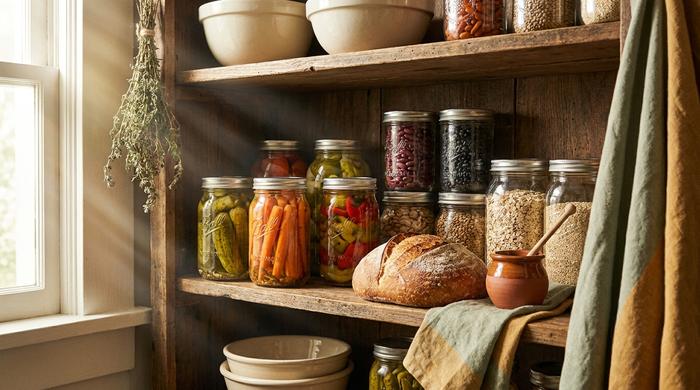
- Food storage. Start with a few extra weeks of shelf stable groceries. Build slowly. Rotate what you store. Eat what you store. This is not bunker living. It is exactly what nearly every grandmother used to do.
- Water. Aim for at least one gallon per person per day, for a minimum of two weeks. Add a quality filter for longer term peace of mind.
- Finances. Build an emergency fund. Pay down debt aggressively. Avoid the trap of consumer credit. Cash on hand is one of the most useful preps you will ever have.
- Skills. Learn to cook from scratch. Learn basic first aid. Learn how to repair what you own. Skills cannot be stolen, lost, or burned in a fire.
- Community. Scripture is clear that we are not meant to do life alone. Build real relationships with neighbors, your local church, and other prepared families. Real resilience is always communal.
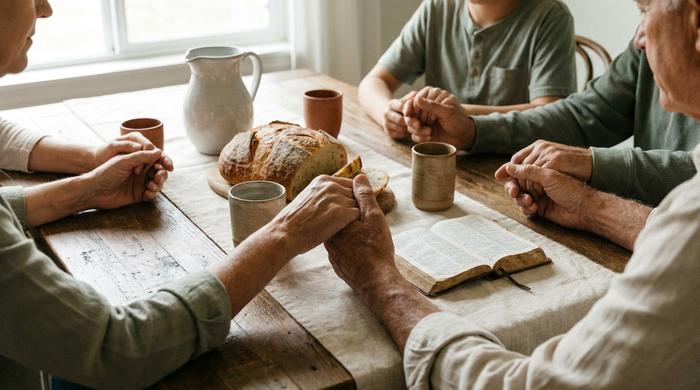
- Spiritual reserves. Memorize Scripture. Build a real prayer life. Lead your family in worship at the table. The deepest crises in life are not always physical, and a person without spiritual reserves will collapse faster than one without food.
Notice what is missing from that list. No bunker. No tactical gear. No fear. The biblical prepper is not building a fortress. He is building a stable home that can weather the storms God has warned us are part of life.
How to Start Prepping the Biblical Way Without Getting Weird About It
The first month is the hardest. Most beginners overdo it, burn out, and quit. Then they assume prepping is not for them. It is. They just tried to climb a mountain in week one.
Pray first. Ask God for wisdom about what your family actually needs. Ask Him to remove fear and replace it with stewardship. He will answer that prayer in surprisingly practical ways.
Start absurdly small. Add one extra week of groceries. Buy a single case of water. Set aside a hundred dollars in cash. Small steps you can keep beat dramatic moves you cannot. Prepping is a long obedience in one direction, not a weekend project.
Stay generous. Build margin in your life so you can be the family that blesses others when hard times come. The prepared Christian should be the one knocking on neighbors’ doors with a meal, not the one hiding behind drawn curtains.
Stay rooted. Do not let prepping become the gospel. The food on the shelf is a tool. The Lord is your refuge. Keep that order right, or you will end up worshiping your supplies instead of the Savior who provided them.
Stay teachable. Listen to older believers who have lived through hard seasons. Read your Bible more than the latest prepper blog. For more on this conversation, this biblical perspective on prepping from Got Questions is a thoughtful place to keep studying.
What About End Times and Tribulation?
This question is going to come up, so let us handle it directly. Some Christians believe prepping is pointless because tribulation is coming no matter what. Others believe we should prepare precisely because the days ahead look uncertain. Different end-times views, same daily call to readiness.
Jesus Himself used the language of preparedness when He spoke about the future. He told us to be like servants whose lamps are burning, ready for the master’s return. He warned that in the days before the flood, people were eating and drinking and ignoring every warning right up to the end. The pattern repeats. Read the future soberly. Live the present faithfully. Keep oil in your lamp.
No matter where you land theologically, no faithful reading of Scripture lets you off the hook for providing for your family today. The same Bible that promises a future hope also tells you to be ready for the realities of this week.
A Picture of a Home Where Faith Leads the Prepping
Picture this for a moment, because this is what biblical prepping actually feels like once it has settled into a family.
The pantry is full. Not panicked, just full. The bills are paid early. The kids know how to start a fire and patch a wound. The father can fix what breaks. The mother can feed unexpected guests without warning. There is cash in the safe and oil in the lamp. The Bible is open on the table, and someone in the house actually reads it.
The doors are not locked out of fear. They are locked out of common sense.
That family is not afraid of next month. They are not afraid of next year. They have done the work, made the plans, and laid the supplies away. Then they have placed every bit of it in the hands of the God who fed Israel in the wilderness, sustained Elijah by ravens, and multiplied loaves and fish on a hillside.
They prepare because they believe. They rest because they trust. That is biblical prepping, and that is the rhythm Scripture has been quietly inviting His people into from the very first chapter of Genesis.
Final Answer: Is Prepping Biblical?
So, is prepping biblical? Yes. Without hesitation. The Bible never asks you to choose between faith and foresight. It asks you to hold both at the same time. Noah built. Joseph stored. The ant gathered. David carried five stones. The Proverbs 31 woman clothed her household in scarlet because she had prepared for the snow. Esther planned for a full year before her moment.
Modern prepping, done with humility and love, is the same old idea wearing new clothes. It is the long tradition of God’s people taking responsibility for what is in their hands, and trusting Him for everything that is not.
If you have been wrestling with whether you should prepare your family for harder days, here is the answer that runs through the entire Bible. Yes, with wisdom. Yes, with generosity. Yes, with prayer. And yes, without fear.
You can prep and pray at the same time. You always could. And honestly, that is exactly what God has been asking of His people from the very beginning. The pantry. The savings. The skills. The open Bible. The bowed head. All of it, together, is what a faithful life has always looked like.
Start small this week. Add an extra bag of rice to the cart. Tuck a little more into savings. Open your Bible to Genesis 41 and read Joseph’s story out loud to your family. You are not stepping away from faith when you do that. You are stepping into it.